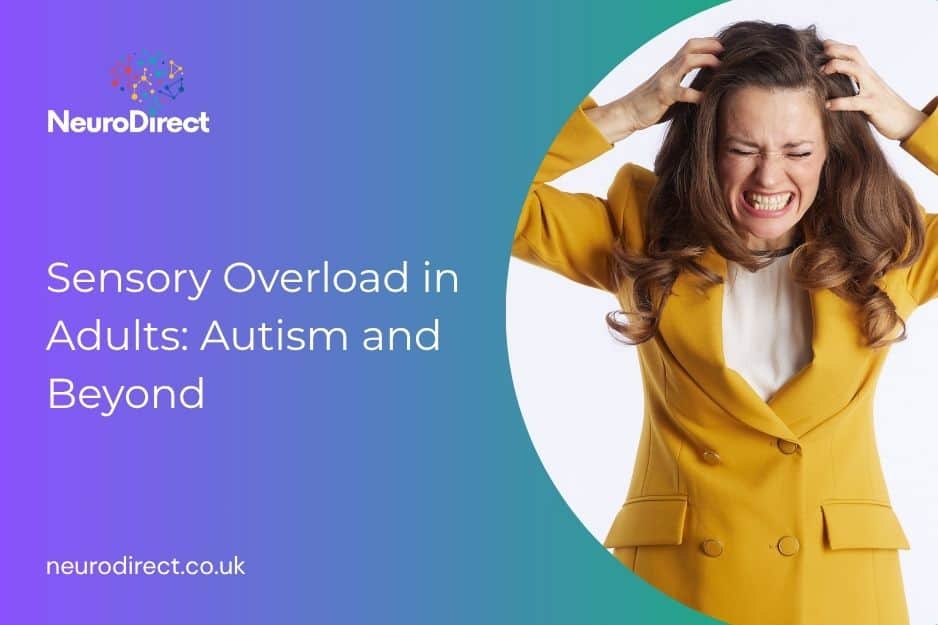
Sensory Overload in Adults: Autism and Beyond
Estimated reading time: 6 min read
Sensory overload happens when the brain receives more sensory input than it can comfortably process. It can affect autistic and non-autistic adults alike.
If sensory overload and overstimulation feel familiar, exploring autism screening tools can help you better understand your sensory profile and identify supportive next steps.
- What is sensory overload?
- What causes sensory overload?
- Is sensory overload a sign of autism?
- Can adults have sensory processing issues?
- How do you calm sensory overload? Practical strategies
- Immediate strategies (what to do in the moment)
- Short-term adjustments (same day/next few hours)
- Longer-term strategies (ongoing management)
- Workplace and social adjustments
- When to seek assessment or professional help
- Practical examples: a day of small adjustments
- Supporting someone who experiences sensory overload
- Resources and further reading
- Conclusion
What is sensory overload?
Sensory overload can feel like the world has turned up the volume too high: lights glare, noises pierce, textures irritate, and your ability to think or cope rapidly diminishes. While many people associate sensory issues with children, adults commonly experience significant sensory challenges too. This article explains what sensory overload in adults actually is, why it happens, how it can connect with autism and other conditions, and practical ways to manage and seek support.
Sensory overload in adults occurs when one or more of the brain’s sensory systems receive more input than they can process comfortably. That might mean loud or unpredictable noises, bright or flickering lights, strong smells, crowded spaces, certain textures, or even intense emotional input. For some adults this leads to anxiety, panic, irritability, physical discomfort, shutdown (withdrawal and immobility), or meltdowns (overwhelm with strong emotional or physical reactions).
This experience is closely tied to adult sensory sensitivity and neurodivergent sensitivity, but it isn’t limited to neurodivergent people. Anyone can experience temporary sensory overload in stressful or chaotic environments.
What causes sensory overload in adults?
Sensory overload in adults has several overlapping causes, often working together:
- Neurological differences: Some brains process sensory information differently, so ordinary stimuli register as unusually intense or distracting. This is common in conditions such as autism, ADHD, or sensory processing disorder.
- Sensory environment: Crowded, noisy, brightly lit, or unpredictable spaces increase sensory input and the likelihood of overload.
- Stress and fatigue: When you’re exhausted, anxious, or stressed, your tolerance for sensory input drops.
- Medical conditions: Migraines, tinnitus, PTSD, chronic pain, and certain medications can heighten sensory sensitivity.
- Cumulative load: Sensory overload can build over time—small uncomfortable stimuli accumulate until a tipping point is reached and a significant reaction occurs.
Is sensory overload a sign of autism?
Short answer: It can be, but it’s not definitive on its own.
Many autistic adults report strong sensory differences — heightened sensitivity to sound, light, texture, or smell, or the opposite (seeking intense sensory input). Autism sensory issues are part of the diagnostic criteria for autism spectrum disorder, so sensory overload may be an important clue. However, sensory sensitivity alone does not prove autism. Similar sensory difficulties can appear with ADHD, anxiety disorders, migraine conditions, and other neurological or medical issues.
If sensory overload resonates with you and is affecting daily life, it’s reasonable to explore whether autism—or another condition—is involved. Resources like the NHS guide to autism in adults can help you understand common signs and next steps. If you want a quick, private check-in first, consider online screening tools to see whether formal assessment might be helpful.
Can adults have sensory processing issues?
Yes. Adults can and do experience sensory processing issues, whether they were present in childhood or emerged later. Some people have lifelong sensory differences that weren’t recognised earlier, especially if they developed coping strategies that masked the challenge. Others notice changes in sensory tolerance after life events, illness, or stress.
Sensory processing issues in adults may look like:
- Avoiding busy shops, public transport, or social events because they are overwhelming.
- Finding certain fabrics or clothing intolerable.
- Becoming easily distracted by background noise or visual clutter.
- Needing quiet or predictable routines to function well.
Occupational therapists and specialists familiar with adult sensory profiles can help identify patterns and suggest personalised strategies.
How do you calm sensory overload?
1. Immediate strategies (what to do in the moment):
- Remove yourself from the trigger if possible: step outside, go to a quiet room, or move to a less crowded area.
- Use grounding techniques: slow, deep breaths; focus on a single object; name five things you can see or hear to anchor attention.
- Apply sensory tools: earplugs, noise-cancelling headphones, sunglasses, a soft scarf or weighted lap pad can reduce incoming stimuli.
- Reduce cognitive load: close your eyes, sit down, and give yourself permission to pause and recover.
2. Short-term adjustments (same day/next few hours):
- Hydrate and eat something small—low blood sugar can worsen sensitivity.
- Use calming routines: a warm shower, gentle music, or a short walk in nature to rebalance.
- Communicate needs: let someone you trust know you’re overwhelmed and need time alone or a low-stimulation environment.
3. Longer-term strategies (ongoing management):
- Plan and pace: map out busy days and build recovery time between high-stimulation events.
- Modify environments: at home and work, reduce clutter, control lighting, and set up a quiet zone.
- Build a sensory toolkit: identify items and routines that consistently soothe you, such as noise-cancelling headphones, fidget items, or specific clothing.
- Learn sensory integration techniques: occupational therapy can teach personalised strategies and sensory diets—planned activities that balance sensory needs.
- Sleep and self-care: improving sleep, managing stress, and maintaining physical health increase overall tolerance for sensory input.
Workplace and social adjustments
If sensory overload affects your work or relationships, reasonable adjustments can make a major difference. Consider:
- Flexible working hours or remote work days to avoid rush-hour travel.
- A quieter workspace, desk dividers, or permission to use headphones.
- Clear communication with colleagues or managers about sensory needs and quiet signals.
You don’t have to disclose a diagnosis to ask for adjustments—focusing on specific environmental changes and how they help your productivity is often enough.
When to seek assessment or professional help
If sensory overload regularly disrupts daily life, work, relationships, or mental health, consider seeking professional advice. Steps include:
- Try reputable online screening as a first step to see whether autism or another neurodivergence might be relevant. NeuroDirect offers screening resources and links to further assessment pathways.
- Discuss symptoms with your GP, who can refer you for specialist assessment or occupational therapy.
- Consider an occupational therapist for sensory processing assessments and personalised strategies.
- If autism is suspected, adult diagnostic assessments can provide clarity and open doors to support—see the NHS page on signs in adults for guidance on the diagnostic pathway.
Connecting with specialist organisations can also provide practical advice. For example, the National Autistic Society offers detailed guidance on sensory differences and coping strategies.
Practical examples: a day of small adjustments
- Morning: choose soft clothing and low-scent products to avoid tactile and olfactory triggers.
- Commute: use off-peak travel, noise-cancelling headphones, or listen to a calming audio track.
- Work: request a quiet workspace, use visual timers to manage meetings, and schedule short, regular breaks.
- Evenings: opt for predictable low-stimulation routines—dim lights, gentle music, and a short walk to decompress.
These small changes add up and help reduce the frequency of overload events.
Supporting someone who experiences sensory overload
- Believe their experience—sensory input is subjective and very real.
- Ask what helps and follow their lead; small practical actions (turning down music, offering a quiet space) are often valuable.
- Avoid pushing social pressure to stay in overwhelming environments; patience and clear communication build trust.
Resources and further reading
- For practical tips on sensory sensitivities, see our guide: 6 Tips to Help Sensory Sensitivities.
- For information on sensory differences in autism, the National Autistic Society has an in-depth overview.
- For guidance about signs of autism and adult assessment pathways, the NHS provides clear information on next steps.
Conclusion
Sensory overload in adults is a common and often misunderstood experience. It can arise from neurological differences such as autism, from other neurological or medical conditions, or from the cumulative effects of stressful environments and fatigue. The good news is that many effective strategies exist—from immediate coping techniques to longer-term environmental adjustments and professional supports.
If sensory issues resonate with you and are affecting your day-to-day life, take the next step: explore screening options and consider a formal assessment if suggested. Understanding your sensory profile is a powerful step toward better daily functioning and wellbeing.
Take an online autism test if sensory issues resonate.
Frequently Asked Questions
What is sensory overload?
Sensory overload happens when the brain receives more sensory input than it can comfortably process, leading to overwhelm, distress or difficulty functioning.
What causes sensory overload?
Sensory overload can be caused by neurological differences, stress, fatigue, loud environments, bright lighting, strong smells or cumulative sensory input over time.
Is sensory overload a sign of autism?
Sensory overload can be associated with autism, but it is not exclusive to it. It may also occur in ADHD, anxiety disorders, migraines and other neurological conditions.
Can adults have sensory processing issues?
Yes. Many adults experience sensory processing issues, including sensitivity to noise, light, textures or crowded environments, whether diagnosed or not.
How do you calm sensory overload?
Reducing sensory input, moving to a quieter environment, using grounding techniques and taking short recovery breaks can help calm sensory overload.

 ADHD
ADHD