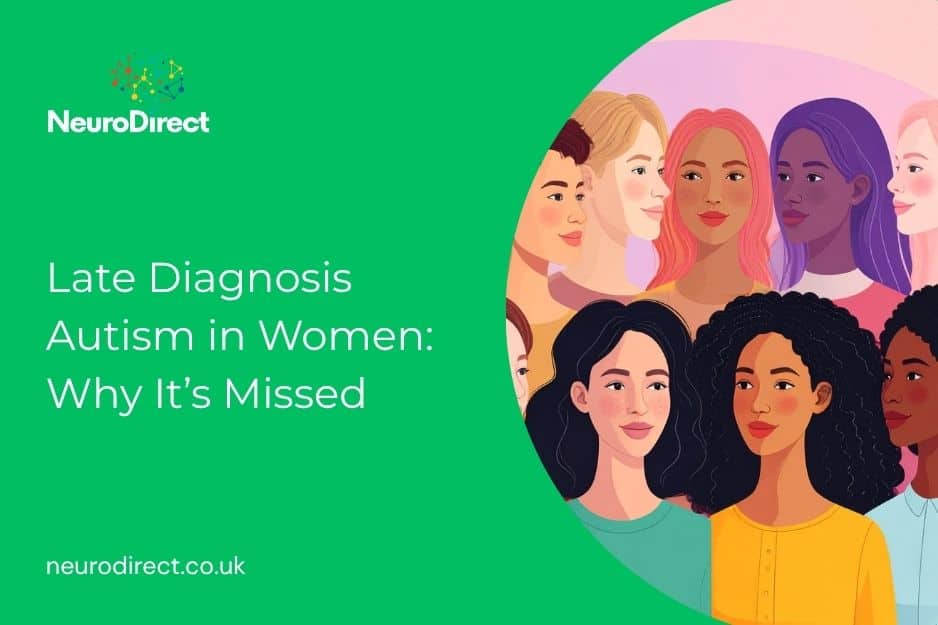
Late Diagnosis Autism in Women: Why It’s Missed
Estimated reading time: 8 minutes
Autism is often missed in women because many autistic traits present differently than male stereotypes, particularly through masking and internalised coping strategies.
If you relate to these experiences, taking an Autism Quotient (AQ) screening test can be a practical first step towards understanding your traits and deciding whether further assessment may help.
- Late Diagnosis Autism in Women: Why It’s Missed
- Introduction
- Why autism is often missed in women
- What are signs of autism in adult women?
- Social and communication differences
- Sensory processing and routines
- Cognitive and emotional profile
- Subtle repetitive behaviours and interests
- Autistic masking
- Why are women diagnosed later?
- Can you be autistic and not know until adulthood?
- How assessment and diagnosis differ for adults
- The role of hormones and life stages
- Co-occurring conditions and misdiagnosis
- Why a later diagnosis matters
- Practical steps if you suspect late diagnosis autism in women
- Support after diagnosis
- Tips to manage masking and energy
- Common questions answered
- Conclusion
- Take the next step
Introduction
Receiving a diagnosis of autism as an adult can bring clarity, validation and new access to supports. For many women, though, that diagnosis arrives much later than it might have — sometimes not until their 30s, 40s or beyond. This article explores why late diagnosis autism in women is common, what signs to look for, and what steps you can take if you think the label fits you.
Why autism is often missed in women
There are several overlapping reasons why autism is frequently missed in women and girls. These include diagnostic bias, social expectations, and the phenomenon known as autistic masking.
- Diagnostic history and male-centred criteria: Much of the clinical research and diagnostic criteria for autism were developed based on male presentations. Early diagnostic tools emphasised behaviours and play patterns more commonly observed in boys, so female presentations were under-recognised.
- Gendered social expectations: Girls are often socialised to prioritise relationships and emotional labour. This social pressure can encourage behaviours that camouflage autistic differences, making them less visible to family, teachers and clinicians.
- Autistic masking: Many autistic women learn strategies to hide or compensate for difficulties in social interaction, sensory sensitivities and repetitive behaviours. Masking can be conscious (learning scripts, mirroring others) or subconscious, and it can be exhausting. Because of masking, autistic traits may not be obvious in short clinical assessments.
- Co-occurring or misdiagnosed conditions: Anxiety, depression, eating disorders or personality disorders frequently co-occur with autism in women. Sometimes these conditions attract clinical attention while the underlying autistic profile remains unidentified.
- Hormonal and developmental differences: Some research suggests that changes across the life course, including puberty, pregnancy and menopause, can alter the visibility of autistic traits. For example, coping strategies that worked in childhood may break down under adult stresses.
What are signs of autism in adult women?
Autism in adult women can look different from stereotyped presentations. Below are common female autism traits and autism in women symptoms to watch for. Not everyone will have all these features — autism is highly individual.
1. Social and communication differences
- Strong desire for connection but difficulty maintaining or initiating friendships
- Using learned social scripts rather than spontaneous social reciprocity
- Feeling like an outsider or ‘acting’ to fit in
- Intense focus on a small number of interests, sometimes more socially acceptable or career-focused
2. Sensory processing and routines
- Heightened or reduced sensitivity to sounds, lights, textures, smells or tastes
- Rigid routines or strong preference for predictability
- Overwhelm in busy or noisy environments leading to shutdowns or meltdowns
3. Cognitive and emotional profile
- Highly analytical thinking, attention to detail, and pattern recognition
- Struggles with executive functioning: planning, organisation, time management
- Masked or internalised expressions of distress that present as anxiety, low mood, or perfectionism
4. Subtle repetitive behaviours and interests
- Special interests that may be socially acceptable (e.g. careers, animals, literature)
- Repetitive behaviours that are less physically obvious (mental rituals, focused research)
Autistic masking
Autistic masking is one of the most important reasons signs can be missed. Masking includes mimicking facial expressions, rehearsing conversational phrases, suppressing stimming behaviours and forcing eye contact. While masking can help people navigate social situations, it often costs significant emotional energy and contributes to burnout, anxiety and late-life recognition of autism.
Why are women diagnosed later?
Several factors converge to delay diagnosis for women:
- Early behaviours overlooked: Girls who are quiet, compliant or socially eager may not raise concerns in the same way that a boy who displays overt behavioural differences might.
- Stereotypes and bias: Clinicians and teachers may unconsciously expect autism to look like the male stereotype, so they miss presentations that are more internalised.
- Compensation and coping: Many autistic women spend years learning social strategies that mask their differences, delaying recognition until supports are no longer adequate.
- Focus on co-occurring mental health: When anxiety or depression is treated without exploration of underlying causes, autism can remain undiagnosed.
- Life transitions: Major life changes such as moving out, starting a demanding job, pregnancy or menopause can break down previously effective coping strategies and make autistic traits more apparent.
Can you be autistic and not know until adulthood?
Yes. It is entirely possible to be autistic and not receive a diagnosis until adulthood. Late diagnosis is common and does not make someone’s experience any less valid. Many adults only seek assessment once they recognise a recurring pattern of challenges, after reading about autistic experiences, or when a partner, friend or child receives a diagnosis and prompts reflection.
Some signs that might prompt adult assessment include:
- A lifelong sense of difference or never entirely fitting in
- Persistent sensory sensitivities that cause distress
- Cognitive strengths (e.g. attention to detail) paired with social or organisational challenges
- Recurrent mental health difficulties that are resistant to standard treatments
If any of these resonate, pursuing an adult autism diagnosis can offer clarity and access to targeted supports.
How assessment and diagnosis differ for adults
Adult autism diagnosis typically involves a multi-step process: a screening or self-report measure, a detailed developmental history, clinical interviews, and sometimes input from family members or partners. Standardised assessments are adjusted to capture both overt and masked presentations.
A practical first step is screening. The Autism Quotient (AQ) is a widely used screening questionnaire that can help you reflect on traits and decide whether to seek a full assessment. You can try the AQ screening here: AQ screening.
If screening suggests autistic traits, a specialist assessment with a clinician experienced in adult autism and female presentations is recommended. For more information on signs, see our detailed guide: detailed guide on signs of autism in women.
The role of hormones and life stages
Though research is still developing, many autistic women report that life stages influence how their traits are expressed. Puberty can make social expectations more complex. Pregnancy and postpartum periods can change sensory sensitivities and emotional regulation. Menopause and midlife stresses can also unmask difficulties previously compensated for. Hormonal changes may interact with sensory processing and mood, altering visibility of autistic traits.
If you notice changes in how you cope at different life stages, mention this during an assessment — it can provide important context.
Co-occurring conditions and misdiagnosis
Autism in women is often accompanied by other mental health conditions. Anxiety, depression, obsessive-compulsive traits, eating disorders, ADHD and trauma responses can all co-occur. These diagnoses can co-exist with autism or sometimes obscure it. A thorough adult autism diagnosis considers a full developmental history and looks at the pattern of strengths and challenges across life.
Why a later diagnosis matters
- Validation and identity: For many, a diagnosis explains longstanding struggles and can be validating.
- Access to support: Diagnosis can unlock access to tailored therapies, occupational adjustments, social support groups and community resources.
- Better mental health care: Understanding autism can help clinicians adapt treatments for anxiety, depression and trauma in autism-informed ways.
- Self-compassion and strategy: A diagnosis often helps people shift from self-blame to practical strategies, such as energy management, sensory supports and communication tools.
Practical steps if you suspect late diagnosis autism in women
- Start with screening: Try an Autism Quotient (AQ) test as a reflective first step. Our online AQ is a useful screening tool: Autism Quotient (AQ) screening.
- Gather history: Note early childhood behaviours, school experiences, friendships and sensory sensitivities. Collect any school reports, childhood photos or accounts from family that could provide developmental context.
- Find a clinician with adult autism expertise: Seek a diagnostic service or clinician experienced in female autism traits and masking. Ask whether they routinely assess adults and consider masked presentations.
- Consider co-occurring conditions: Be open about anxiety, depression, eating concerns or ADHD symptoms — these inform a comprehensive assessment.
- Connect with peer support: Hearing others’ experiences can help you understand masking and strategies. National resources such as the National Autistic Society have useful advice for women: National Autistic Society advice for women. The CDC also provides accessible information about autism in women and girls: CDC information on autism in women and girls.
Support after diagnosis
A diagnosis is a gateway to supports, not an endpoint. Post-diagnostic interventions are highly individual but may include:
- Psychoeducation: Learning how autism shapes your thinking and behaviour
- Occupational or workplace adjustments: Practical changes to reduce sensory overload and support executive functioning
- Therapy tailored to autism: Approaches that consider sensory needs, social differences and co-occurring mental health issues
- Peer groups and mentoring: Spaces to share experiences and practical coping strategies
Tips to manage masking and energy
- Prioritise rest: Masking consumes energy. Building predictable downtime into your schedule reduces burnout risk.
- Set boundaries: Clear communication about sensory limits and social needs can preserve energy.
- Use practical supports: Noise-cancelling headphones, visual schedules, and task breakdowns help with sensory and executive challenges.
- Be selective in disclosure: Decide who you tell and prepare short explanations to protect your privacy and emotional safety.
Conclusion
Late diagnosis autism in women is a common experience shaped by social expectations, diagnostic history and the remarkable adaptability of autistic women. A diagnosis later in life can bring clarity, access to supports, and a framework for understanding long-standing strengths and challenges. If this article resonates, start with a screening measure, gather your developmental history, and seek a clinician experienced with adult presentations and autistic masking.
If you think the traits described here fit your experience, a practical first step is to take an Autism Quotient (AQ) screening to explore your traits and decide whether to pursue a full assessment: Autism Quotient (AQ) screening.
Take the Autism Quotient (AQ) test to explore your traits.
Frequently Asked Questions
Why is autism often missed in women?
Autism is often missed in women because diagnostic criteria historically focused on male presentations, while many women develop masking strategies that hide autistic traits.
What are signs of autism in adult women?
Common signs include sensory sensitivities, social exhaustion, masking behaviours, intense interests, executive functioning difficulties and feeling different from peers.
Why are women diagnosed with autism later?
Women are often diagnosed later because their traits may appear more internalised, socially adapted or hidden through masking and coping strategies.
Can you be autistic and not know until adulthood?
Yes. Many autistic adults are only diagnosed later in life after recognising recurring social, sensory or emotional patterns that were previously misunderstood.
What is autistic masking?
Autistic masking refers to consciously or unconsciously hiding autistic traits by copying social behaviours, rehearsing conversations or suppressing natural responses.

 ADHD
ADHD