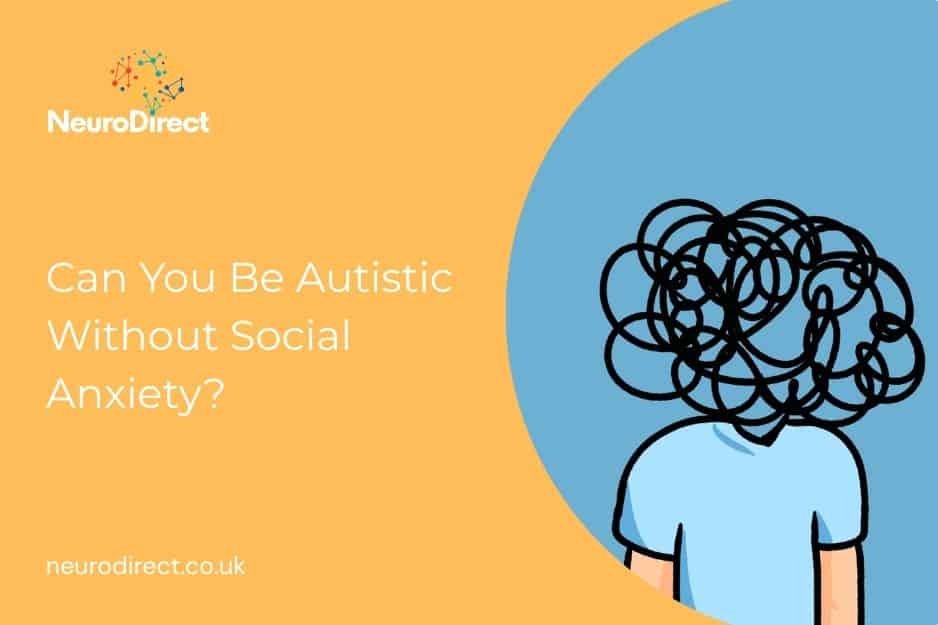
Can You Be Autistic Without Social Anxiety?
Estimated reading time: 6 minutes
Autism and social anxiety are different conditions. While they can overlap, many autistic people do not experience social anxiety disorder.
What is autism?
Autism spectrum disorder (ASD) is a neurodevelopmental condition characterised by differences in social communication and interaction, alongside restricted and repetitive patterns of behaviour, interests, or activities. These differences vary widely across individuals — hence the term “spectrum.” Key features often include:
- Challenges with social reciprocity and nonverbal communication
- Intense or specialised interests
- Sensory sensitivities or atypical sensory experiences
- Preference for routines and predictability
Importantly, the diagnostic criteria (see professional sources such as the American Psychiatric Association) focus on these developmental differences rather than on specific emotional responses like anxiety.
Is social anxiety part of autism?
Social anxiety is not a required part of an autism diagnosis, but it commonly co-occurs. Social anxiety is a specific anxiety disorder where fear of negative evaluation, embarrassment, or scrutiny leads to avoidance or distress in social situations. For some autistic people, social differences — such as difficulty reading social cues or sensory overload in group settings — can make social situations stressful, and that stress can develop into social anxiety over time.
However, many autistic people do not feel social anxiety. Some may prefer solitude or small, structured social interactions without experiencing the persistent fear that defines social anxiety disorder.
What is the difference between autism and social anxiety?
Autism and social anxiety can look similar on the surface, but their origins and typical experiences differ. Here are some practical distinctions to consider:
- Root cause: Autism is a neurodevelopmental pattern present from early development. Social anxiety is a psychiatric disorder centred on fear of social judgement and avoidance.
- Motivation for avoidance: Autistic social differences sometimes lead to withdrawal because social interaction is confusing, unpredictable, or sensory-overwhelming. Social anxiety causes avoidance because of fear of negative evaluation or embarrassment.
- Internal experience: Autistic people may describe feeling disconnected from social norms or overwhelmed by sensory input. People with social anxiety often describe intense worry about what others think and physical anxiety symptoms (racing heart, sweating) in social contexts.
- Timing and development: Autism traits tend to be lifelong, often visible in childhood. Social anxiety can develop later, sometimes after negative social experiences.
- Overlap: It is possible to have both conditions. Autism and social anxiety can interact and amplify one another.
Can you be autistic without social anxiety?
Yes. The core diagnostic features of autism do not require the presence of social anxiety. Many autistic people do not meet criteria for an anxiety disorder. Instead, they may experience:
- Quiet or selective social engagement without a fear-based avoidance pattern
- Preference for solitary activities or structured social interaction
- Social differences that feel neutral or invisible to the person, rather than anxiety-provoking
Some autistic individuals report feeling calm in social situations if sensory demands are managed and expectations are clear. Others report discomfort that never reaches the threshold of social anxiety disorder. The important point is that autism encompasses a broad range of experiences, and social anxiety is only one possible co-occurring condition.
Why are autism and social anxiety sometimes confused?
There are several reasons clinicians and people get the two mixed up:
- Similar outward behaviours: Avoidance of eye contact, quietness in groups, or limited participation can be explained by either autism or social anxiety.
- Camouflaging or masking: Some autistic people learn to mimic social behaviours to fit in. This can be exhausting and lead to anxiety, making it harder to untangle underlying causes.
- Late diagnoses: Many autistic adults, particularly females and non-binary people, get diagnosed later in life after being labelled anxious or shy for years.
- Lack of developmental history: Without a clear developmental history, traits that began in childhood may be missed, making anxiety seem like the primary issue.
How do professionals distinguish between them?
Assessment typically involves a thorough developmental history, observation, and standardised questionnaires. Clinicians look for:
- Evidence of social communication differences from early childhood
- Restricted interests, repetitive behaviours, or sensory patterns
- Whether fear of negative evaluation consistently drives behaviour (suggesting social anxiety)
- Contextual factors, such as whether avoidance occurs across many settings or mainly where judgement is feared
Because of the overlap, a comprehensive evaluation by professionals experienced in adult autism and anxiety is often necessary to separate the conditions and identify co-occurrence. For a general overview of autism, see the American Psychiatric Association’s information on ASD.
Misdiagnosis and internalised traits
Misdiagnosis happens. People are sometimes diagnosed with social anxiety when autism would better explain lifelong social differences. Conversely, someone with social anxiety may be incorrectly labelled autistic if avoidance looks like social detachment. Internalised autistic traits — such as masking, intense internal interests, or subtle sensory differences — can be overlooked, especially in individuals who learned to compensate.
Women, non-binary people, and high-functioning adults are particularly at risk of misdiagnosis, because social expectations and adaptive strategies can conceal autistic traits. If you suspect a missed autism diagnosis, it is worth seeking a specialist assessment that explores developmental history and sensory, communication, and behavioural patterns.
Practical tips if you’re trying to understand your experiences
- Reflect on childhood patterns: Did you have social communication differences, intense interests, or sensory sensitivities early on?
- Note the reason for avoidance: Is it fear of judgement, sensory overload, or difficulty understanding social rules?
- Consider coexistence: It’s possible to have autism and social anxiety. Treating anxiety can still be helpful even if autism is present.
- Speak with a clinician experienced in both autism and anxiety to get a nuanced assessment.
- Use structured screening tools as a first step if you’re unsure; our site lists online autism screening options for adults.
Treatment and supports
Supports depend on needs. For social anxiety, evidence-based treatments include cognitive behavioural therapy (CBT) and, when appropriate, medication. For autism, supports focus on communication strategies, sensory adjustments, social skills coaching, and accommodations in work or education. When both conditions are present, a combined approach that addresses anxiety symptoms and autistic needs is ideal.
Practical environmental changes often help, such as predictable routines, quiet spaces, sensory adjustments, and clear communication. These adjustments can reduce stress for autistic people who may or may not experience social anxiety.
Where to learn more
Reliable resources are essential. For information on social anxiety, the NHS provides clear guidance on symptoms and treatment. For autism, professional bodies such as the American Psychiatric Association offer overviews of diagnostic criteria and what to expect from assessment.
We also have resources on how autism and anxiety interact, and screening tests you can try online to gain more clarity about adult autism traits.
Final thoughts
Autism without social anxiety is common. While social anxiety can co-occur and complicate the picture, autism is defined by developmental differences in social communication and behaviour, not by anxiety. Understanding the distinction helps people find the right supports, avoid misdiagnosis, and access accommodations that fit their needs.
If you relate to autistic traits and want to explore further, a structured screening or specialist assessment can be a helpful next step.
For more on how autism and anxiety interact, see our article on autism and anxiety, and if you want to try a screening, visit our online autism screening tests page.
If you relate to autistic traits, consider a screening test.
Frequently Asked Questions
Can you be autistic without social anxiety?
Yes. Autism does not require social anxiety for diagnosis. Many autistic people experience social differences without fear of judgement or social embarrassment.
What is the difference between autism and social anxiety?
Autism is a neurodevelopmental condition involving social communication differences and behavioural traits, while social anxiety is a fear-based anxiety disorder centred around social judgement.
Why are autism and social anxiety confused?
They can appear similar because both may involve social withdrawal, discomfort in groups, or reduced eye contact. However, the underlying reasons are often different.
Can autism cause social anxiety?
Autism itself does not cause social anxiety, but repeated stressful or overwhelming social experiences may contribute to anxiety developing over time.
How do professionals tell autism and social anxiety apart?
Professionals assess developmental history, communication patterns, sensory experiences and whether social avoidance is driven primarily by fear of judgement or broader neurodevelopmental differences.

 ADHD
ADHD