
RAADS-R Adult Autism Test (Free Online Self-Assessment)
Medically reviewed by Dr Neil Drew
Chartered Clinical Psychologist (BSc Hons, MSc, DClinPsy, CPsychol)

Understand Your Traits with a Structured Self-Assessment
Explore whether your lifelong social, emotional or sensory experiences may align with autism traits. The RAADS-R (Ritvo Autism Asperger Diagnostic Scale-Revised) is a widely used self-assessment tool for adults exploring autistic traits. It’s free, instant, and trusted by clinicians to support the diagnostic process.
Autism research and screening have expanded significantly in the past decade, with a 2023 survey of autism research and diagnostic tools mapping trends across populations.
Start your test below. Your results will appear instantly and confidentially.

Time's up
What the RAADS-R measures (Ritvo Autism Asperger Diagnostic Scale–Revised)
- The Ritvo Autism Asperger Diagnostic Scale-Revised is a widely recognised self-assessment tool designed to help adults explore whether they may be on the autism spectrum. Unlike brief online quizzes, the test is a structured and clinically informed screening test that examines lifelong neurodivergent traits, particularly those that may have gone unnoticed in childhood.
- Unlike many earlier autism assessments, which were mainly focused on children, the screening test was created to capture the unique presentation of autism traits in adults, including difficulties with social interactions, communication, sensory sensitivities, and restricted interests.
The test assesses four key domains of autistic traits:
Language and Communication
This section evaluates difficulties with verbal and non-verbal communication, including challenges with conversational flow, interpreting tone, or understanding implied meanings, all common experiences among autistic individuals.
Sensory and Motor Responses
Many autistic adults experience sensory processing differences. This category explores sensitivities to sound, light, touch, or repetitive movements, which can influence daily comfort and interactions. Learn more about sensory & motor sensitivities in autism.
Social Relatedness
This domain looks at how you connect with others, from forming relationships to reading social cues and managing social anxiety. Persistent struggles in these areas are a core feature of autism spectrum conditions.
Circumscribed Interests and Routines
Also known as restricted or repetitive behaviours, this section examines a preference for routines, intense focus on specific topics, or resistance to change, all traits commonly associated with autism. Read more about autism demonstrating circumscribed interests.
This autism self-assessment is designed to provide a deeper understanding of how these patterns manifest in adult life. Whether you’re seeking personal insight or preparing for a conversation with a specialist, this tool can offer a strong foundation.
You can also try our other screening tools for ADHD and autism traits, or add your practice to join the UK’s leading neurodiversity directory.
Score Ranges and Interpretation
Scores on the test range from 0 to 240. A score of 65 or higher is considered indicative of autistic traits, though interpretation should always take context into account.
Here’s a general guide to what different score bands may suggest:
| Score | Interpretation |
|---|---|
| Below 44 | Typically not autistic: Many neurotypical individuals fall within this range, though some autistic people may also score this low depending on how they interpret the questions. |
| 45–64 | Some autistic traits, but below clinical threshold: Traits may be present, but not to a degree that strongly suggests autism. Still, further assessment may be warranted, especially if lived experience aligns with autistic traits. |
| 65–89 | Mild to moderate likelihood of autism: This is the range where autism starts to be considered. Traits are likely persistent and noticeable, though not always formally diagnosed. |
| 90–129 | Moderate to strong likelihood of autism: A score in this range reflects significant traits, aligning with many common experiences of autistic adults. A diagnostic evaluation may be especially worthwhile. |
| 130–160 | Very strong likelihood of autism: This band often overlaps with average scores reported by clinically diagnosed autistic individuals in research studies. |
| Above 160 | Extremely high levels of autistic traits: This suggests an intense presence of neurodivergent characteristics, typically consistent with autism spectrum conditions. |
Remember, no self-assessment is definitive. Scores are best viewed as an indication, not a diagnosis, and professional evaluation is always recommended if you’re exploring neurodivergence more seriously. You may also be interested to see what happens during an adult autism assessment here.
Reliability & Critisisms
How Reliable is the RAADS-R?
The the Ritvo scale has been widely used in both clinical practice and academic research since it was first introduced in 2008. Reliability studies suggest that the test is effective at distinguishing autistic adults from non-autistic adults, particularly when combined with other assessments. To improve practicality, shorter tools have been explored, including the development of the RAADS-14 short version in 2023.
That said, no screening tool is perfect. False positives and false negatives are possible, especially for individuals with co-occurring conditions such as ADHD, anxiety, or depression. This diagnostic questionnaire should therefore be viewed as a helpful screening step, not a definitive diagnosis.
The test has been validated in multiple populations, including a 2024 German validation study of the Ritvo scale which confirmed its high sensitivity and specificity.

Criticisms of This Screening Instrument
Although this autism screening test is well established, it has faced some criticism within the autism research community:
- Self-report limitations
answers depend on the individual’s own interpretation of the questions.
- Cut-off scores
thresholds may not reflect the full diversity of autism presentations.
- Overlap with other conditions
traits of anxiety, OCD, or ADHD may influence scores.
These criticisms highlight why this should be seen as a useful guide rather than a final word. Professionals often recommend using it alongside other tools and clinical evaluation.
While this specific adult autism self-test remains widely used, a recent systematic review of autism screening tools highlighted variability in accuracy across self-report instruments.
How This Autism Screening Test Helps Adults
For many adults, especially those who may not have been identified as autistic in childhood, this test can provide clarity, validation, and a starting point for further exploration. Some of the key benefits include:
- Encouraging self-reflection on lifelong social, sensory, or communication challenges.
- Supporting conversations with healthcare providers when seeking a referral or diagnosis.
- Helping adults better understand their personal experiences and relationships.
- You can also use our Directory of Neurodiversity Specialists if you’re considering speaking to a professional about your results.
- You can also check for signs of autism in adults here, using the NHS website.
The Ritvo Autism Asperger Diagnostic Scale vs Other Autism Tests
This screening instrument is just one of several recognised tools for assessing autistic traits. Each has its own strengths, and many people choose to take more than one:
A 50-item screening questionnaire designed to measure autistic traits in adults, commonly used in research and clinical settings.
Explores masking and compensation strategies often used to navigate social situations and manage autistic traits.
A shorter version of the RAADS tool, designed to screen for core autistic traits in adults who may have gone undiagnosed.
This autism screening tool stands out for its comprehensive coverage across multiple domains, but using it alongside other questionnaires can give a more complete picture of autistic traits.
You can try our Autism Quotient (AQ) Test or CAT-Q Test to complement your RAADS-R results.
Why Should You Take the RAADS-R Test?
If you’ve ever felt that your lifelong behaviours, sensitivities, or social interactions might align with autism traits, but weren’t recognised as a child, this test can offer meaningful clarity. This particularly suited for adults exploring undiagnosed autism, helping uncover patterns that standard childhood-focused assessments often miss.
This isn’t a surface-level checklist. The RAADS–r explores a broad range of traits across emotional regulation, communication, and sensory experiences, building a more complete picture of how autism may present in adulthood.
Many adults seek answers later in life, especially when childhood traits were overlooked or misunderstood. This test is tailored to evaluate behaviours that may have gone unrecognised during developmental years.
Understanding your neurotype can be transformative. The RAADS–r helps individuals identify their strengths and challenges, fostering greater self-awareness and providing direction on whether to seek a formal autism diagnosis or further support.
Taking the RAADS–R through NeuroDirect not only provides a structured self-assessment, it also connects you with follow-up resources. From other online autism and ADHD tests to our directory of neurodivergent specialists, we’re here to support your next steps.
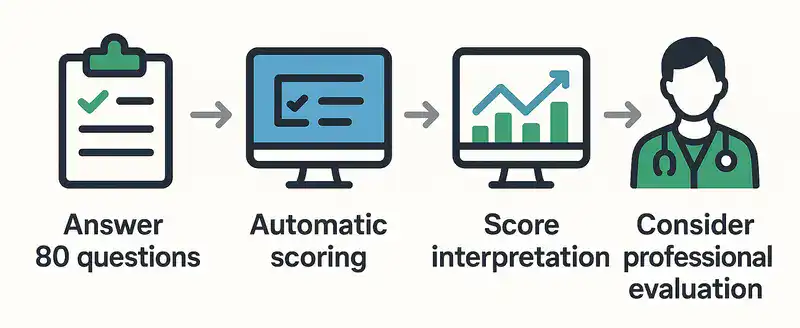
How Does the RAADS-R Test Work?
This autism screening test is simple to complete and designed to offer meaningful insight into lifelong autistic traits. Here’s how it works:
- Answer In-Depth Questions
Reflect on your experiences across areas like emotional regulation, social interactions, sensory responses, and communication.
- Receive an Instant Score
Once completed, you’ll receive a total score that helps indicate whether your traits are consistent with autism spectrum conditions.
- Explore What Your Results Mean
Use your score to guide your next steps, whether that’s reading your detailed report, seeking professional advice, or learning more about autism in adulthood.
This test is structured to provide a clear, research-backed foundation for anyone exploring neurodivergence later in life. You can check out how the test works and it explained here.
What to Do After the test?
Taking the RAADS questionnaire is a valuable first step in understanding your neurodivergent profile, but it’s just the beginning. Whether your score was high, low, or somewhere in between, there are meaningful next steps you can take:

Get Your Personalised Report
Your detailed report breaks down your score across the four domains, explains what each category means, and helps you reflect on your results in the context of adult autism traits. This can be particularly helpful if you’re planning to speak with a clinician or just want deeper self-awareness.
Explore Neurodivergent-Affirming Professionals
If your results raised questions or you’re considering a formal diagnosis, our directory can help you find specialists, therapists, and assessors who understand neurodivergent experiences, many of whom offer online consultations.
Try Other Screening Tools
Autistic traits often overlap with other neurodivergent conditions like ADHD or sensory processing differences. Our full library of screening tests can help you gain a broader understanding of your unique profile.
Other Tests You Might Find Helpful
Explore traits like social interaction, communication, and attention to detail with this 50-question screening tool.
Uncover camouflaging behaviours, including masking and adapting autistic traits in social situations, with this insightful tool.
Evaluate how well you understand and respond to others’ emotions with this focused screening tool.
References
- You can find the original research paper discussing the development and clinical use of the RAADS-R here on PubMed.
- Ritvo, R.A. et al. – The RAADS-R: A Revised Autism Diagnostic Tool for Adults. ScienceDirect. Retrieved from: www.sciencedirect.com
- NCBI – Screening Tools for Adult Autism Diagnosis. Retrieved from: https://www.ncbi.nlm.nih.gov
- The test has also been validated cross-culturally, including a 2024 Persian validation of the Ritvo Autism Asperger Diagnostic Scale among Iranian adults.

About the Author
Harry Sherman
Harry Sherman is the owner of NeuroDirect, a UK-based platform that provides online neurodiversity screening tools, resources, and access to qualified specialists. In this role, Harry oversees the creation, accuracy, and accessibility of content, ensuring that NeuroDirect’s tools, including the RAADS-R test, are easy to use and responsibly presented.
With professional experience in digital strategy, online platforms, and health-related technology projects, Harry has a strong background in making complex information accessible to the public. He works closely with clinicians, researchers, and advocacy groups to ensure NeuroDirect reflects current knowledge and best practice in the field of neurodiversity.
Although not a clinician himself, Harry is passionate about bridging the gap between research, digital tools, and public understanding. His goal is to create a trusted, stigma-free space where people can explore self-assessments, learn more about autism and related conditions, and take informed next steps toward professional evaluation if needed.
Medically Reviewed by
Dr Neil Drew
Chartered Clinical Psychologist (BSc (Hons), MSc, DClinPsy, CPsychol)
- Dr Neil Drew is a Chartered Clinical Psychologist based in Dorset, specialising in adult autism and ADHD assessment, as well as neurodiversity-affirming psychological therapy. He has been working in mental health and neurodivergence since 2011 and qualified as a Clinical Psychologist in 2018 at Exeter University.
- His clinical experience spans NHS adult autism diagnostic services, inpatient neurodivergent adolescent units, and psychological therapy settings. Dr Drew’s integrative therapeutic approach includes CBT, CAT, ACT, and EMDR.
- More about his practice is available at www.drneildrew.co.uk.
- - Reviewed September 2025
Frequently asked questions
Get clear, straightforward answers to common questions about our Launch Accelerator program, pricing, process, and what to expect before enrolling.
What is the RAADS-R test used for?
The Ritvo Autism Asperger Diagnostic Scale – Revised is a self-assessment questionnaire designed to help identify autistic traits in adults. It is often used as a screening tool to support conversations with healthcare professionals but is not a diagnostic test.
Is the RAADS-R accurate?
Research shows this test can be a reliable tool for detecting autistic traits, but it has limitations. False positives and false negatives are possible, and co-occurring conditions like ADHD or anxiety may influence results. Only a qualified professional can provide a diagnosis.
Read more in our guide: How accurate is the RAADS-R test?
How long does the RAADS-R test take?
It usually takes 20 to 30 minutes to complete. It contains 80 questions covering social, language, sensory-motor, and restricted interests. Your results are available instantly once you finish.
You may also want to try our quicker Autism Quotient (AQ) Test.
What is considered a high RAADS-R score?
A score of 65 or above typically suggests significant autistic traits and indicates that a professional assessment may be worthwhile. Lower scores may suggest fewer traits, but the test should not be used in isolation.
Compare your results with other tools such as the CAT-Q Test.
Can the RAADS-R be used for children?
No, the screeningtest was specifically designed for adults (age 16+) who may not have received an autism diagnosis in childhood. For younger people, other assessments such as the ADOS-2 or child-focused questionnaires are more appropriate.
Read more about signs of autism in children here.
RAADS-R vs AQ test: which is better?
Neither test is “better”, they measure different aspects of autistic traits. This is more detailed and covers multiple domains, while the AQ Test is shorter and widely used in research. Many adults find it useful to take both for a more complete picture.
Take the Autism Quotient (AQ) Test to complement your results.
What exactly is the RAADS-R test?
The Ritvo Autism Asperger Diagnostic Scale is a self-report questionnaire developed in 2008 to identify autistic traits in adults who may have been overlooked in childhood. It is now widely used in both research and clinical settings.
Learn more here: What is the Ritvo Autism Asperger Diagnostic Scale test?
Where can I find a clear explanation of the this test?
This screening instrument is an 80-question self-assessment that measures social, language, sensory-motor, and restricted interests. Each question is answered based on lifetime experience, not just current behaviour.
For a step-by-step overview, visit our guide: RAADS-R Test Explained.
What happens during an adult autism assessment?
If your RAADS-R score suggests further investigation, the next step is usually a professional autism assessment. This may involve structured interviews, developmental history, and standardised tools such as the ADOS-2.
Find out more here: What happens in an adult autism assessment?