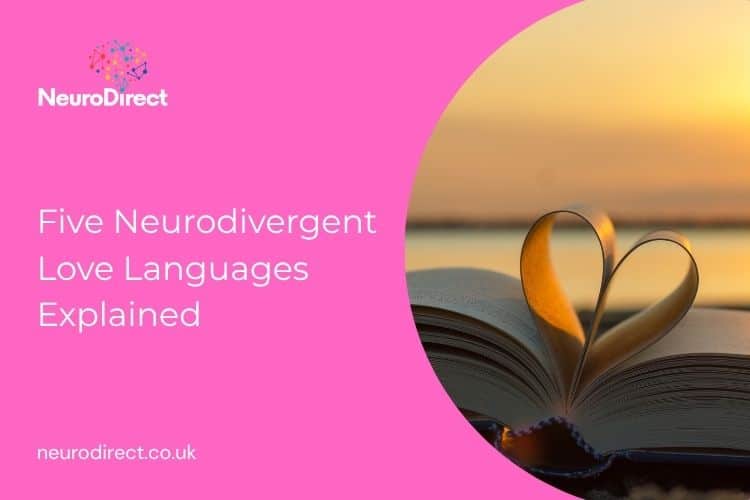
A neurodivergent love language is a way of understanding how people express and receive affection. Love takes countless forms, of course, and while it rarely fits neatly into categories, the concept of love languages offers a useful framework that can help people articulate what they need in romantic, platonic, and family relationships alike.
The five traditional love languages – words of affirmation, acts of service, receiving gifts, quality time, and physical touch – are well established, but they don’t capture the full picture. Each person is shaped by their own experiences, upbringing, cultural background, and neurological wiring, all of which influence how they connect with others.
For neurodivergent individuals, expressing love can come with added complexity, and many people only begin to understand their own communication style and emotional needs after seeking a Private Autism Assessment – a process that can be illuminating when it comes to relationships as well as day-to-day life. Sensory sensitivities, communication differences, and other factors can make conventional expressions of affection challenging. When affection is shown in non-traditional ways, it can sometimes be misread as indifference – but that couldn’t be further from the truth. The five neurodivergent love languages below highlight some of the distinctive and meaningful ways that ND people give and receive love, without needing to compromise their comfort or boundaries.
Penguin Pebbling
In the animal kingdom, few courtship rituals are as charming as that of the penguin. Male penguins seek out small, shiny pebbles to present to their chosen partner – a quiet but meaningful gesture of affection and interest.
This behaviour has found its way into human connection, particularly among neurodivergent people. When direct verbal expression is difficult – saying “I love you” or “I’ve been thinking about you” doesn’t always come naturally – a small, thoughtful token can say everything words cannot. Penguin pebbling bridges that communicative gap, turning an everyday trinket into a heartfelt “I saw this and thought of you.”
Info-Dumping
If you’re familiar with the neurodivergent world, you’ll likely know the concept of a “special interest” – a subject or topic someone becomes deeply absorbed in, learning everything they can about it. Special interests are especially common in autistic people and can range from a specific film genre to a particular species of animal. They often serve as a source of calm, confidence, and personal identity.
Info-dumping is the act of enthusiastically sharing that special interest with someone else – going into depth, covering the details, and inviting the other person in. Far from being a one-sided monologue, it’s an act of vulnerability and trust. If a neurodivergent person is willing to info-dump with you, it means they feel safe around you, that they want you to understand a core part of who they are, and that they believe you won’t brush them off or tune out.
Deep Pressure
Sensory experiences vary widely among neurodivergent people. While some find certain types of touch overwhelming, others are sensory-seeking – meaning they actively look for intense, grounding physical sensations. For these individuals, deep pressure can be a powerful way to feel close to someone and regulate their nervous system at the same time.
This might take the form of a firm, enveloping hug, a shoulder massage, or simply having someone rest against them like a human weighted blanket. These forms of tactile connection can ease anxiety and communicate something profound: “I’m here, and you’re safe.”
Spoon Swapping
Spoon swapping is rooted in spoon theory – a metaphor developed in 2003 by Christine Miserandino to describe how people manage limited energy reserves. Each “spoon” represents a unit of energy, and everyday tasks deplete them at varying rates. Originally used in the context of chronic illness and disability, spoon theory has since been widely adopted by the neurodivergent community as a framework for understanding and communicating fatigue.
Spoon swapping (also called support swapping) means trading tasks with a loved one based on who has the capacity for them on a given day. It’s an act of care that goes beyond grand gestures – it’s paying attention to how someone is doing and quietly stepping in. If your neurodivergent partner or friend is overwhelmed or has hit their limit, offering your spoons is one of the most loving things you can do.
Parallel Play
Parallel play is a term borrowed from developmental psychology, originally used to describe children who play near each other without directly engaging. In the neurodivergent community, the same principle applies to people of any age: being in the same space, doing their own thing, and simply enjoying the presence of another person.
Picture two friends sitting together – one playing a video game, one reading a book, with no conversation required. Also known as body doubling, this is a strategy many people with ADHD use to stay focused and regulated, with another person’s presence acting as a gentle anchor. For ND individuals more broadly, parallel play builds familiarity, reduces social pressure, and creates a space where connection happens naturally. When someone invites you to simply be nearby, it’s not nothing – it’s them letting you into their world.
Nurturing Neurodivergent Connection
Whether you’re neurodivergent or neurotypical, the foundation of any meaningful relationship is the same: open communication, mutual respect, and a genuine willingness to understand each other. That understanding doesn’t require everyone to express love in identical ways – it requires curiosity and openness to the many different forms it can take.
By recognising and embracing neurodivergent love languages, we broaden our definition of affection and create space for people to connect authentically on their own terms. That’s not just good for relationships – it’s a step towards a more neuro-inclusive world.
Frequently Asked Questions
What are neurodivergent love languages?
Neurodivergent love languages are ways that neurodivergent people may express and experience affection that differ from traditional relationship norms. While the five classic love languages — such as quality time or words of affirmation — can still apply, many autistic and ADHD individuals communicate care through behaviours shaped by sensory needs, communication styles, and emotional regulation.
Examples of neurodivergent love languages include penguin pebbling (giving small meaningful objects), info-dumping about special interests, parallel play, deep pressure touch, and spoon swapping. These behaviours are often acts of trust, safety, and emotional connection, even if they do not look traditionally romantic.
How do autistic people show affection differently?
Autistic people may show affection in ways that are less verbal or socially conventional, but equally meaningful. Rather than relying on grand gestures or constant emotional expression, many autistic individuals communicate care through consistency, shared interests, practical support, or simply feeling comfortable enough to exist quietly alongside someone.
What is penguin pebbling in neurodivergent relationships?
Penguin pebbling is a neurodivergent love language inspired by penguins, which sometimes gift pebbles to their chosen mate. In human relationships, it refers to giving small objects, memes, links, snacks, or random items that made someone think of another person.
For many neurodivergent people, penguin pebbling is a way of saying “I care about you” without needing to communicate feelings directly. The gesture may seem small, but it often carries strong emotional meaning because it shows thoughtfulness, attention, and connection.
Why do neurodivergent people enjoy parallel play?
Parallel play allows neurodivergent people to feel connected to others without the pressure of constant interaction. It involves spending time together while doing separate activities, such as reading, gaming, drawing, or working quietly in the same space.
For autistic and ADHD individuals, this type of companionship can feel safer and less socially demanding than traditional forms of bonding. It reduces pressure to maintain conversation while still creating closeness, familiarity, and emotional comfort.
Parallel play is also linked to “body doubling”, a technique often used by people with ADHD to improve focus and regulation through another person’s presence.
What is info-dumping and why is it a sign of trust?
Info-dumping is when someone enthusiastically shares detailed information about a topic they deeply enjoy or care about. In neurodivergent communities, especially among autistic people, special interests can be a major source of identity, comfort, and emotional regulation.
When a neurodivergent person info-dumps with someone, it is often a sign of trust and connection. They are inviting another person into something deeply personal and meaningful to them. Rather than seeing it as “talking too much”, many people view info-dumping as an expression of enthusiasm, vulnerability, and affection.

 ADHD
ADHD